

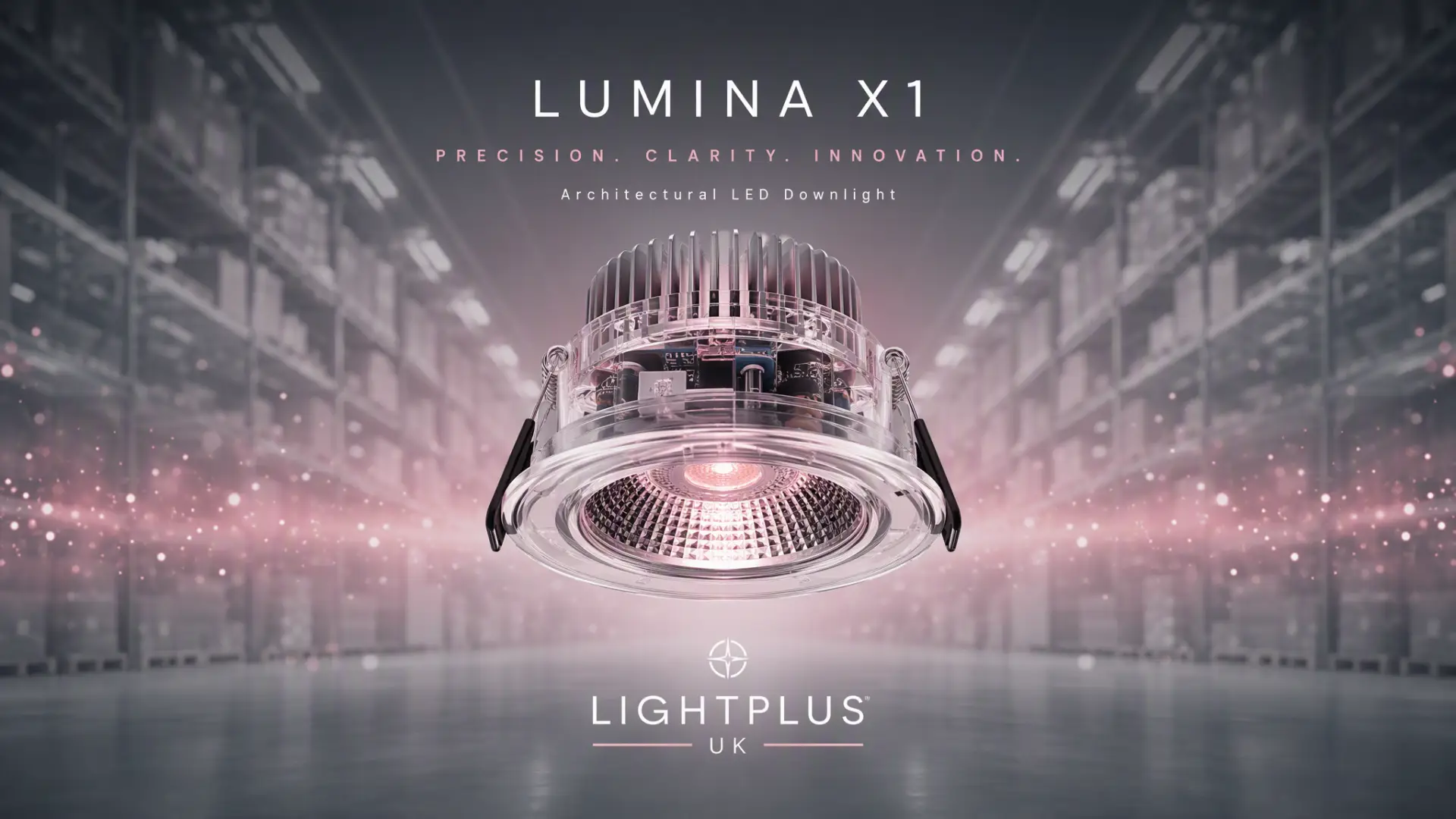
Efficiency is a specification, not a slogan
Across the catalogue, 843 item codes publish both a lumen output and a wattage. The median is 120 lumens per watt, and 673 of them are at or above 100. A traditional halogen lamp manages roughly 15. Every figure is on the product page, so you can check the arithmetic rather than take our word for it.
across 843 published item codes
the majority of the range
so a designer can light to the level actually needed, instead of over-lighting to be safe
Tridonic, Philips, OSRAM, MEAN WELL or Light Plus, matched to on/off, mains dimming, 0-10V or DALI
A long life is the cheapest recycling there is
290 products in the range state a service life of more than 50,000 hours, and eight state more than 100,000. At twelve hours a day, 50,000 hours is over eleven years of use — a fitting that is never made twice, never shipped twice and never thrown away twice.
We publish the rating that sits behind the number, because it matters: L90 B10 means that after the stated hours, 90% of the original light output remains in 90% of fittings. A supplier quoting hours without that code is quoting a number, not a measurement.

A luminaire usually fails at its driver. 310 products are offered with Tridonic, Philips, OSRAM, MEAN WELL or Light Plus gear, so the part that fails is a standard component a qualified person can replace rather than a sealed unit that forces the whole fitting into a skip.
Die-cast aluminium housings with mechanical fixings and gasketed covers. Our installation guides tell the installer how to refit the seals so the ingress rating survives the repair — losing the IP rating during maintenance is how outdoor fittings die early.
Item codes stay in the catalogue, so a replacement matches what is already on site instead of forcing a whole area to be re-lit for the sake of one failure. Every code keeps its specification sheet and photometric file on the product page.
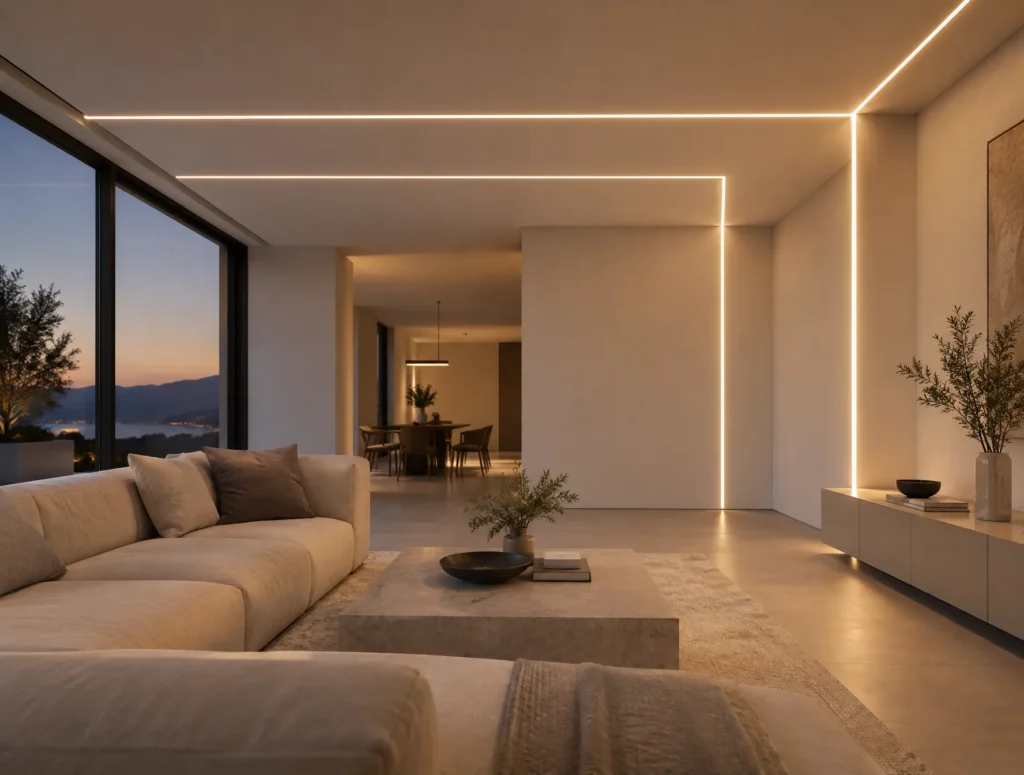
Aluminium, because it comes back
Most of the range is built around die-cast or extruded aluminium bodies. Aluminium carries heat away from the LED, which is what keeps the output up and the life long — and at end of life it is recycled indefinitely without losing its properties, unlike a plastic housing.
Durability is part of the same argument. 214 products are IP65 or better, 50 of them IP67: sealed against water and dust so an outdoor fitting lasts its rated life rather than failing in its third winter.
Finishes are powder coat rather than wet paint, and diffusers are PMMA, polycarbonate or tempered glass, chosen per fitting for the optic rather than for cost.
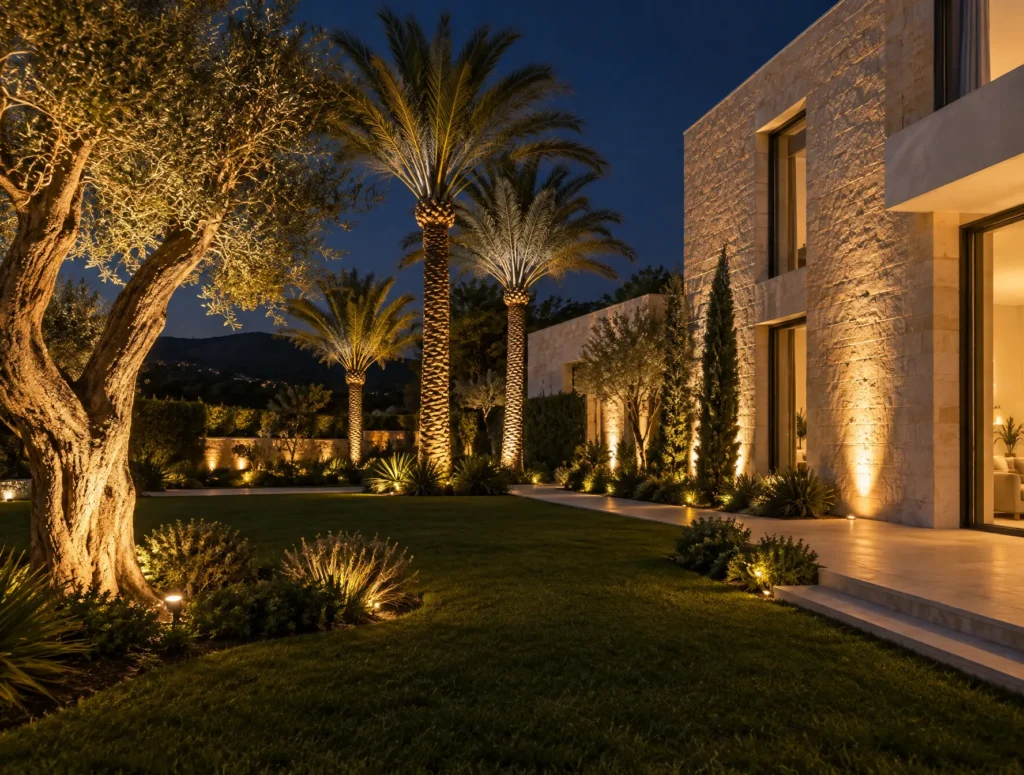
Spill light is wasted energy and a wasted night sky
Every exterior fitting with photometric data carries a BUG rating — Backlight, Uplight and Glare, under IES TM-15-11 — published on its data sheet. It tells a designer exactly how much light goes where it was never wanted: into a neighbour's window, or straight up into the sky. Downloading the IES file and modelling the scheme is how over-lighting gets designed out before anything is installed.
Restriction of Hazardous Substances — limits lead, mercury, cadmium and other substances in electrical equipment.
A REACH declaration is downloadable on every product page, covering substances of very high concern.
Declarations of conformity are published per product, downloadable without asking us for them.
Luminaires are electrical equipment: at end of life they must be collected separately and recycled, never put into general waste. Ask us before a strip-out and we will tell you what the fitting is made of.
Most lighting sustainability pages are written to impress. This one is written to be checked, so it is worth being equally clear about what is not on it. We do not publish a carbon figure per fitting, because we have not had one calculated. We hold no environmental management certification. We do not state a recycled content percentage for our aluminium, because we have not verified what our partners use.
Our photometric files are calculated from published performance data, and are marked as such on every data sheet — they are not LM-79 laboratory measurements. When any of this changes, it will appear here with the evidence attached. A claim you cannot check is worth nothing to a specifier, and worth less than nothing to us.
Send us the space and the level you need. We will come back with the fitting, the photometric file and the load — in writing, so it can go straight into your calculation.